Skip to content

Aqaba dive sites

Scuba Diving: The Thrills and the Risks 1

Scuba Diving: The Thrills and the Risks

Snorkeling, free diving, and scuba diving provide glimpses of the fascinating undersea world. Millions of fans worldwide are drawn to the appeal of vivid coral reefs, a vast array of marine life, and the peacefulness found beneath the waves. Like any adventure sport, diving is not without its perils, though. Comprehending these hazards is essential to guaranteeing security and optimizing this exhilarating experience. The Enchantment of Scuba Diving The underwater world is breathtakingly beautiful. Divers may experience the incredible biodiversity that exists beneath the surface, visit shipwrecks, and swim with gorgeous sea creatures. Underwater weightlessness experiences are similar to flying, offering a singular and exhilarating sensation. Numerous other health advantages of diving include increased mindfulness, decreased stress, and improved physical fitness. Common Risks Associated with Diving 1. Decompression Sickness (DCS) The condition called “the bends,” or decompression sickness is brought on by divers ascending too quickly, which causes nitrogen bubbles to accumulate in the tissues and bloodstream. Symptoms can vary widely, from joint discomfort and vertigo to paralysis and, in extreme situations, death. Divers should monitor their nitrogen levels with computers or dive tables and adhere to appropriate ascent speeds to reduce this risk. 2. Barotrauma Damage to body tissues brought on by variations in pressure is known as barotrauma. It usually affects the sinuses, lungs, and ears. To avoid this scenario, equalizing pressure during descent and climb is crucial. Divers should be taught methods like the Valsalva exercise to equalize ear pressure. 3. Necrosis of Nitrogen Nitrogen narcosis, also known as “rapture of the… Read More »Scuba Diving: The Thrills and the Risks

couple on a snorkeling trip

What Makes Aqaba a Snorkeler’s Paradise?

Dive into the enchanting underwater world of Aqaba – a snorkeler’s paradise blessed with vibrant coral reefs, diverse marine life, and year-round ideal conditions.

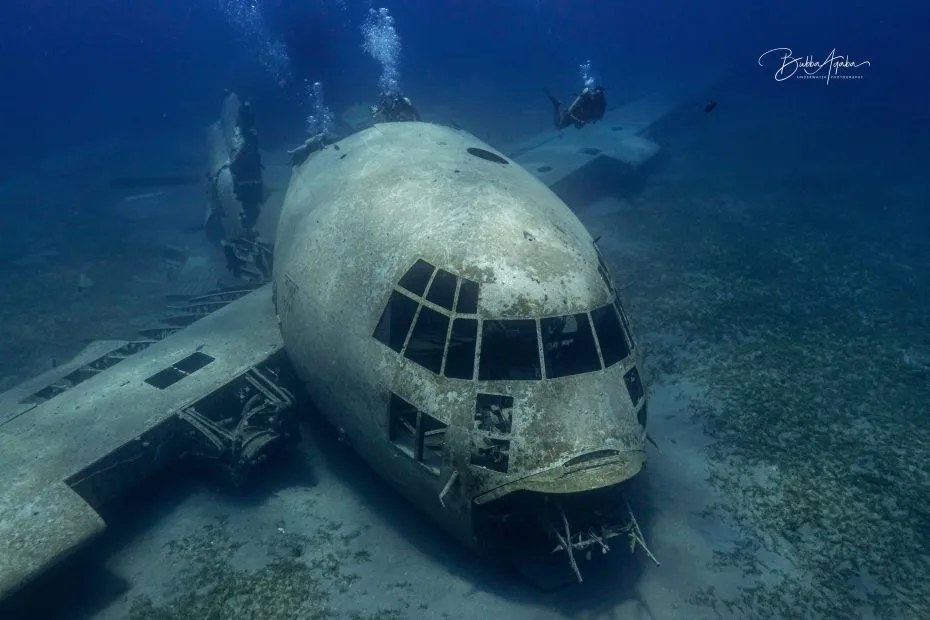
C130 Plane in Aqaba

Aqaba’s Underwater Treasures: Wrecks and Wonders

Ask anyone about Jordan, and they’ll likely rave about Petra, that enigmatic city carved into colossal red cliffs. But if you catch a scuba diver’s ear, tales of exceptional wreck diving might bubble up: picture tanks, helicopters, and a colossal aircraft deliberately submerged beneath the waves. I had the chance to dive these very wrecks in June 2023, when partaking in Aqaba 1st Aqaba Underwater Photography Competition. Situating itself in the heart of the Middle East, Jordan is predominantly landlocked, except for 27 km of coastline around Aqaba, the diving epicenter. Nestled between Saudi Arabia, and Israel’s Eilat, Aqaba boasts direct flight accessibility or can be reached via a four-hour land transfer, after landing in Amman. Deep Blue Dive Center Of the myriad dive operators, my buddy and I chose Deep Blue Dive Center, because of their commitment to underwater photography, eco-conscious practices, and comfortable boats. Their Jordanian hospitality was palpable, treating us to 5-star service and camaraderie as we embarked on the diving escapades. Diving logistics were a breeze. As we stayed down-town, mornings began with a mini-bus ride to Tala Bay marina, home to Deep Blue Dive Center. Most days we were aboard Deep Blue 2, a 23.9-meter motor yacht which had the amenities and comfort of a full blown liveaboard, even though we were using it just for daytrips! The Story Behind the Wrecks Aqaba has blossomed into a premier wreck diving destination, owed in large part to the Jordanian Royal Family’s affinity for scuba diving. It all began in 1985 when… Read More »Aqaba’s Underwater Treasures: Wrecks and Wonders

The Freak Storm that Left the Hercules C130 a Real Wreck 2

The Freak Storm that Left the Hercules C130 a Real Wreck

On November 16, 2017, Aqaba created a new dive site and sunk an old Hercules C130 transport aircraft. It took a lot of preparation to prepare the plane for sinking and much coordination between the Royal Jordanian Navy, the Aqaba Port Corporation, and ASESA, the Aqaba Special Economic Zone Authority. They placed it 300m/984ft off the shore at a maximum depth of about 16 meters. King Abdullah II spearheaded this project to promote tourism and create an artificial reef for fish to inhabit. Some people are naturally skeptical about artificial reefs and wonder why people would want to put things like planes underwater. Because artificial reefs soon become a habitat for new marine life, they create popular destinations for divers. They also divert pressure away from heavily visited coral reefs. Too many divers in certain spots can eventually cause damage. So many believe that artificial reefs can create a win-win situation for the environment and the economy. And it was with this intent that Aqaba decided to sink the Hercules. They placed the plane in a location near the M42 Duster tank that was easily accessible from shore  or boat by divers and snorkelers. At that time, the plane was fully intact and quite a sight to behold underwater.  Photo: Torbjorn Gylleus / DYK – The Scandinavian Dive Site, used by permission Photo: Torbjorn Gylleus / DYK – The Scandinavian Dive Site, used by permission Hercules C130 2017 Photo: Torbjorn Gylleus, used by permission Photo: Torbjorn Gylleus, used by permission Photo: Torbjorn Gylleus, used by… Read More »The Freak Storm that Left the Hercules C130 a Real Wreck